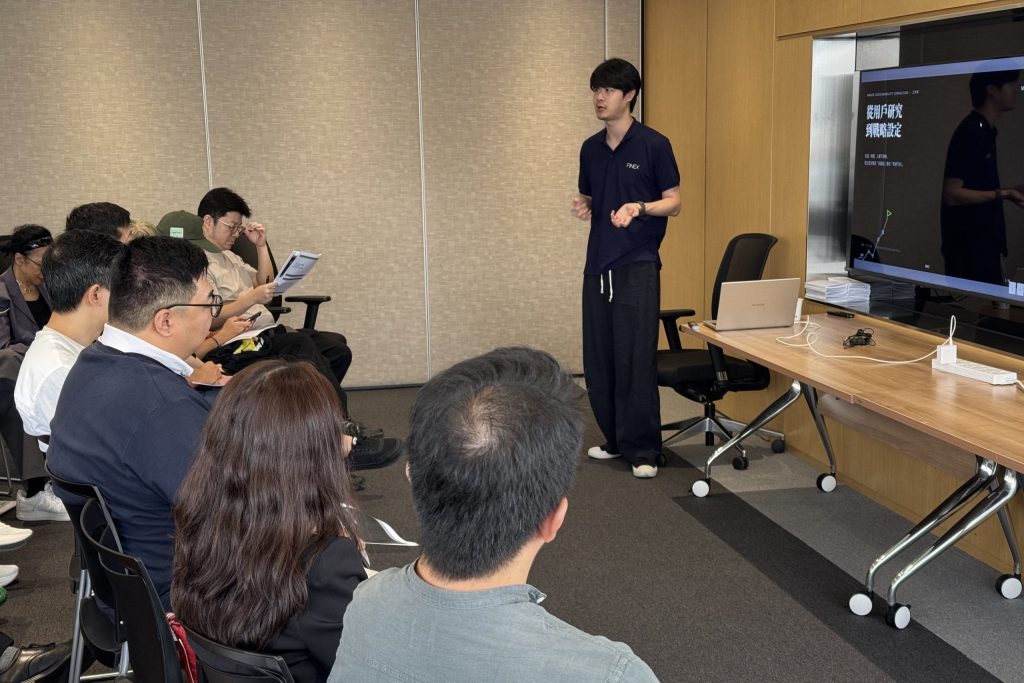



On 21 May, the AWE exploration programme — “Branding and Cross-Border E-commerce: Hong Kong SMEs in Chinese Mainland” — was completed. We would like to thank Claire Hao, PhD, Business Development Director, CUM General Manager, Health Products (China) at PuraPharm International (H.K.) Ltd, for sharing how brands can open up the mainland market through cross-border e-commerce.
In a changing market and channel landscape, enterprises need to first identify their positioning and then use replicable marketing methods to gradually grow their brand. The key points are as follows:
Different consumer habits
Mainland consumers usually do not first become familiar with a brand and then decide whether to buy. Instead, they first build an impression through content, platform search, and repeated exposure, and then gradually form trust and purchasing behaviour.
Therefore, when Hong Kong enterprises enter the mainland market, they cannot continue to use their original one-step thinking, but must understand the market rhythm of “content first, cognition later.”
Different channel strategies
The channels in the mainland market are layered: some platforms are responsible for exposure, some for search, some for conversion, and some for private-domain accumulation.
Therefore, doing business in the mainland market is not about single-point placement, but about understanding the role of each platform in the entire sales funnel. Otherwise, even if there is traffic, it may not necessarily be converted into stable sales.
“Channels are not better just because there are more of them; the key is to know which stage of the conversion chain each channel is responsible for.”
Different brand communication
Hong Kong brands often have a mature manufacturing, quality, or professional background, but when they enter the mainland market, background alone is not enough; they also need to be repackaged into a story that is easier for the local audience to understand.
A brand is not just about saying “how good I am”; it is about saying “why this matters to you,” because the mainland market is more receptive to scenario-based, story-based, and emotionally connected communication.
“A brand is not about making yourself clear; it is about making the other party’s needs clear.”
Different conversion logic
In the mainland market, conversion is often an accumulation process: first exposure, then saving, then revisiting, then comparing, and finally purchasing.
This means that brands should not only focus on final sales, but also pay attention to intermediate interaction metrics, because those actions that seem like “not yet converted” are actually building the foundation for future conversions.
“Conversion is not the first step; trust accumulation is the first step.”
The role of KOC
Key Opinion Consumer (KOC) is a point that is well worth highlighting in this sharing session.
In the mainland market, many brands do not first rely on large-scale advertising to build awareness. Instead, they work with KOLs and KOCs to establish trust on content platforms, accumulate saves and search volume, and gradually allow consumers to approach the brand actively.
Returning to the Well-being Economy: creating long-term well-being through brand trust
From the perspective of the Well-being Economy, enterprises entering the mainland market are not only pursuing growth, but also taking the opportunity to rethink their own value. Excellent brand marketing is not just about selling products; it is about helping consumers make better choices, making services more trustworthy, making transactions more transparent, and building a longer-term mutually beneficial relationship between enterprises and customers. At the same time, it is not about chasing traffic, but about transforming the enterprise’s own professionalism, integrity, service, and innovation capabilities into a new language that the market can understand, so that the brand can develop a sustainable operating path in the mainland market.